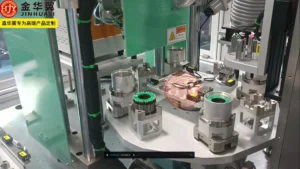
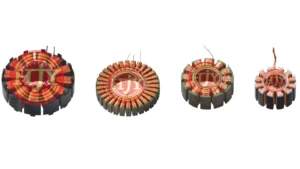
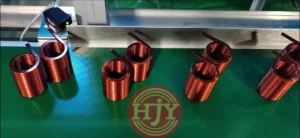
As electronic products become smaller, operate at higher frequencies, and integrate more functions, transformer and inductor windings are becoming increasingly complex. Multiple wire diameters, several lead groups, insulation sleeves, sectional winding, and taping place higher demands on wire placement, tension stability, lead positioning, and changeover efficiency.
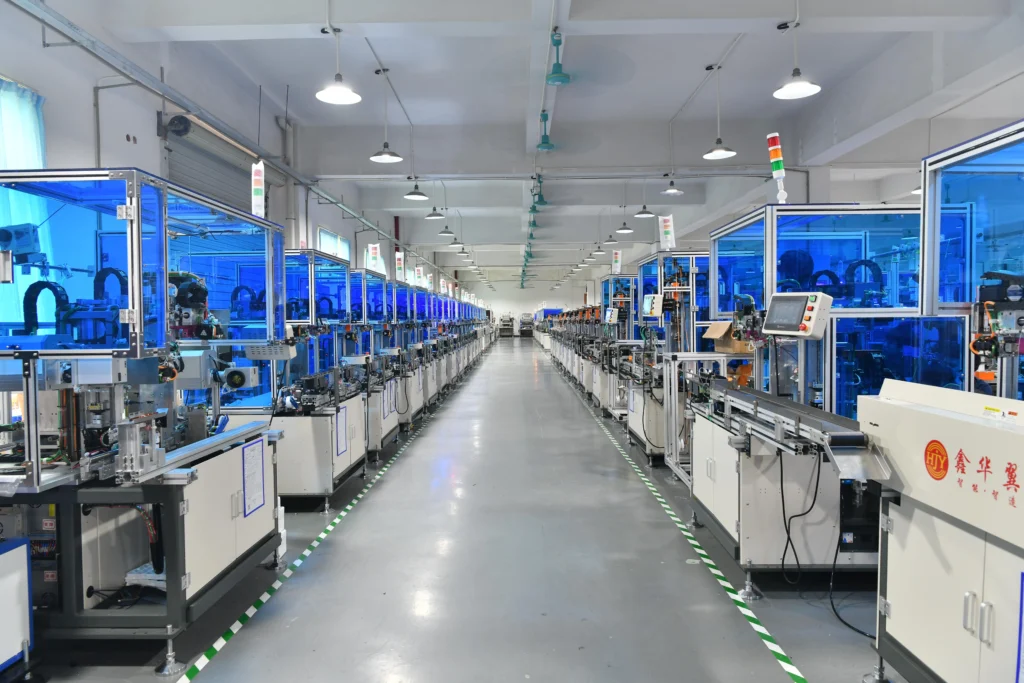
Conventional production using separate machines or manual assistance often involves repeated loading, additional work-in-process handling, lead-position variation, and inconsistent results between batches. For low-volume, high-mix, and multi-winding products, JHY integrates automatic sleeving, precision winding, lead processing, wire cutting, and taping on one equipment platform to reduce intermediate handling and establish a repeatable process.
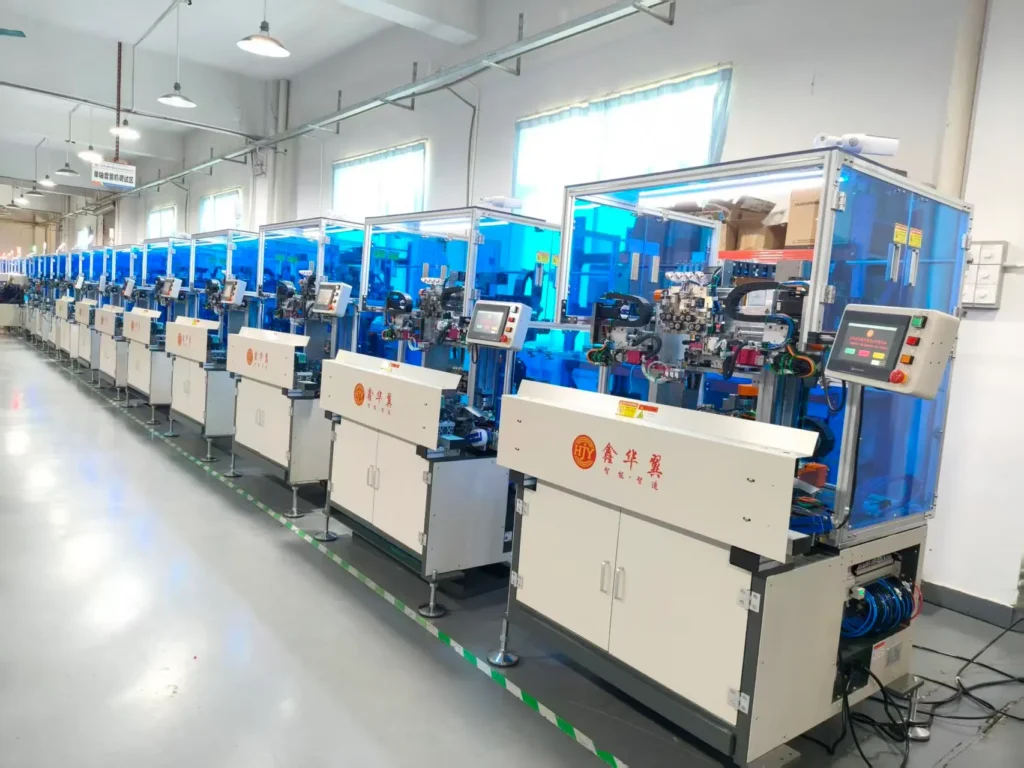
1. What Is a Single-Spindle Dual-Arm Sleeving and Winding Machine?
This machine is an integrated production platform for bobbin-type transformers, inductors, and other multi-winding coils. A single workpiece spindle is positioned between two coordinated working arms that perform wire pulling, sleeve insertion, wire hooking, winding, cutting, and taping operations.
The dual-arm arrangement coordinates different process actions within a compact working area. It is particularly suitable for products with long leads, several windings, or multiple wires that must be processed in sequence. Tooling and programs can be configured according to the bobbin, terminal positions, wire diameters, sleeve specifications, and winding sequence.
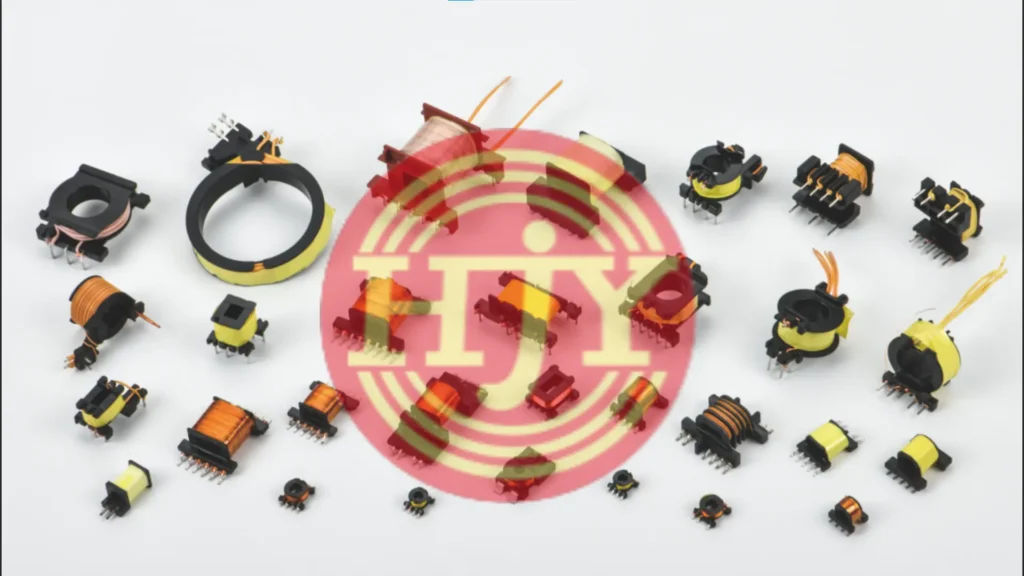
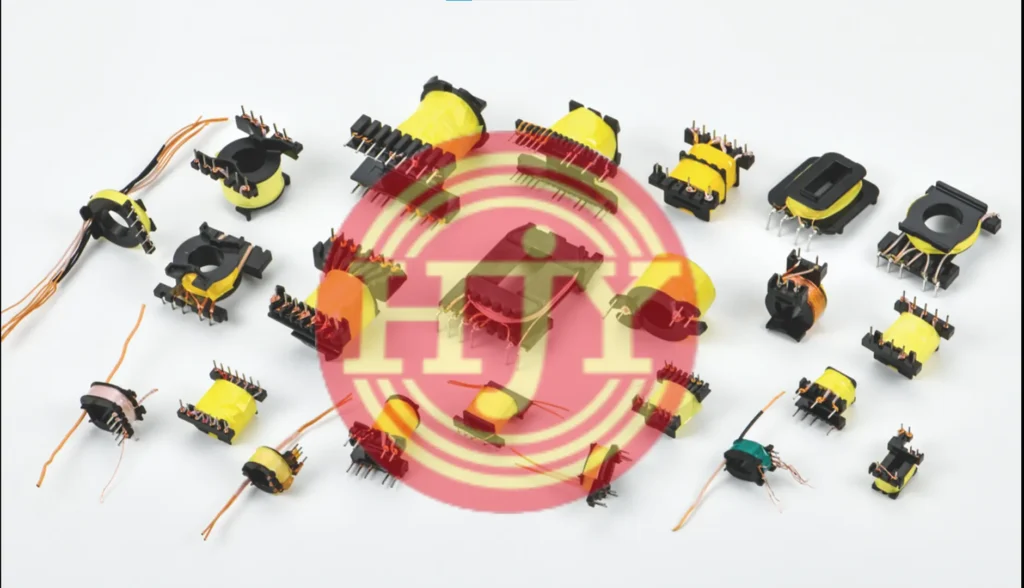
Typical applications include EP, PQ, EQ, and other bobbin families. The actual compatible models, wire range, lead length, and cycle time should be confirmed using customer drawings, samples, and process validation.
2. Main Manufacturing Challenges of Multi-Winding Sleeved Coils
2.1 Managing Multiple Wires and Winding Sequences
One product may contain primary, secondary, feedback, or auxiliary windings with different wire diameters, turn counts, and winding directions. The equipment must accurately manage each wire, start and finish positions, winding sequence, and reserved lead length to prevent incorrect wire selection, missing windings, or sequence errors.
2.2 Controlling Sleeve and Lead Positions
Insulation sleeves protect the lead wires and also affect bending radius, terminal connection, and downstream assembly. Sleeve length, insertion position, lead direction, and reserved length must match the bobbin and terminal design.
2.3 Maintaining Tension and Wire Placement
Different wire diameters and enamel types require different tension settings, acceleration profiles, and guide paths. Applying one parameter set to every wire may cause fine-wire stretching or breakage, thick-wire springback, loose placement, or inconsistent coil geometry.
2.4 Coordinating Multiple Processes and Repeated Positioning
When sleeving, winding, cutting, and taping are performed on separate machines or with manual operations, the product must be loaded and transferred several times. This can cause lead displacement, incorrect bobbin orientation, and additional waiting time. Integrating critical operations on one platform reduces repeated positioning.
3. Core Processes and Equipment Configuration
3.1 Precision Winding and Multi-Stage Tension Control
The spindle, traverse axis, and working mechanisms operate together according to the product program, controlling turn count, traverse stroke, pitch, speed, acceleration, and deceleration.
Different tension settings and motion profiles can be assigned to individual wires and windings. Depending on the project, the machine can use magnetic, electronic, or servo tensioners, with optional wire-break detection, tension monitoring, and abnormal-condition alarms.
Winding results are also affected by wire tolerance, bobbin dimensions, wire stiffness, enamel condition, and the actual position of the preceding layer. Sample winding is recommended for multilayer precision winding and special wire products.
3.2 Three-Guide Three-Wire Configuration
The three-guide, three-wire configuration is an important process option for multi-winding products. Dedicated three-hole guide tooling and coordinated servo positioning route three wires through their programmed lead paths and process different windings in sequence.
The three wires may have different diameters, with separate winding numbers, process parameters, and operating sequences. Whether the application uses simultaneous movements or sequential winding should be determined by the available bobbin space, terminal layout, wire-interference risk, and cycle-time target.
Compared with frequent manual wire changes, pre-positioning multiple wires and switching them through the program can reduce auxiliary operations. The tooling and wire paths must still be validated on the actual product.
3.3 Automatic Sleeving and Lead Processing
Depending on the product, the machine can be configured for sleeve feeding, length measurement, cutting, wire insertion, and lead positioning, coordinated with start-wire handling, terminal hooking or wrapping, and final wire cutting.
Sleeve material, inside and outside diameters, length tolerance, flexibility, and friction against the wire all affect automatic insertion stability. Actual sleeve and wire samples are recommended for project evaluation.
3.4 Automatic Taping
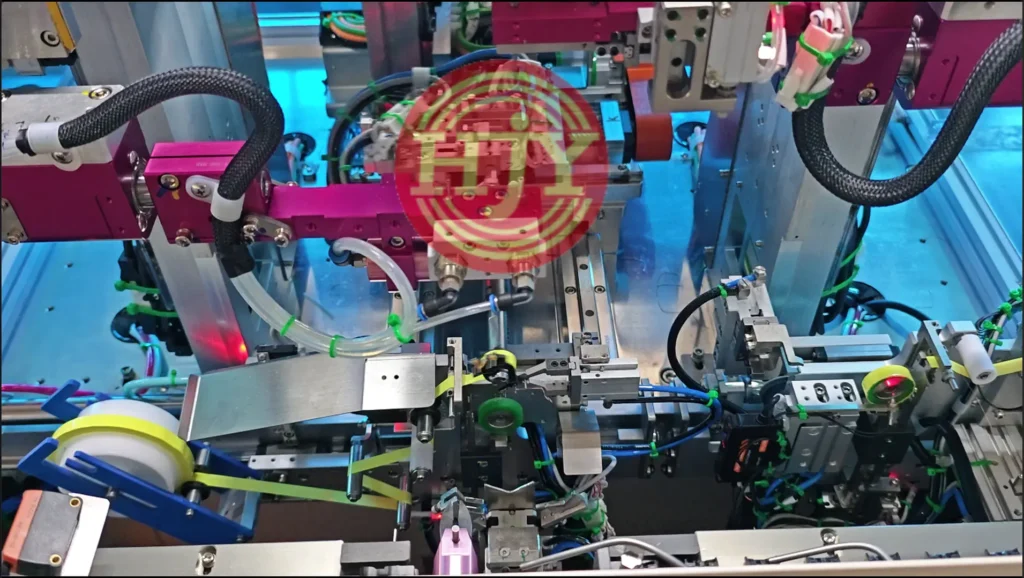
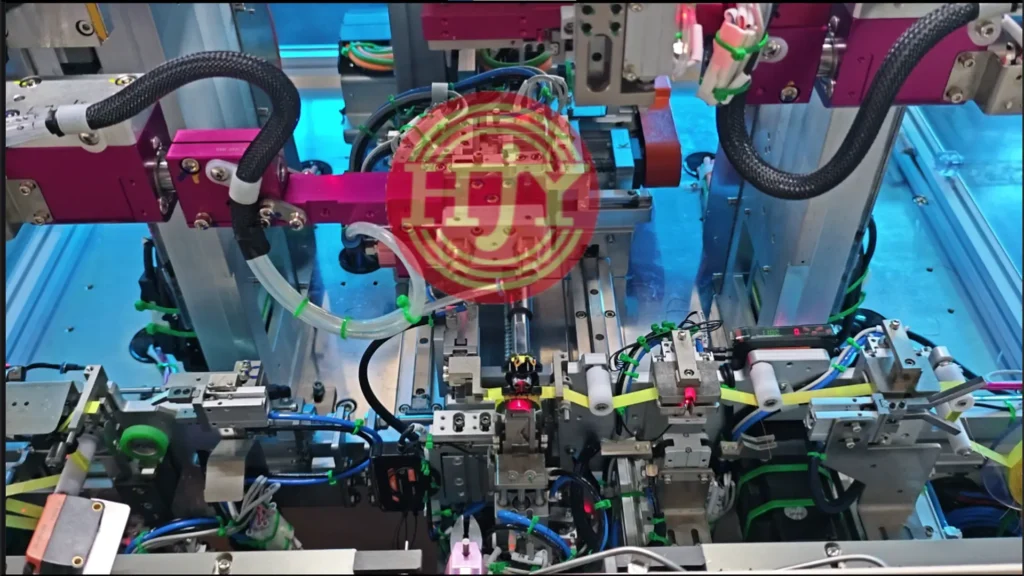
The automatic taping unit performs tape pay-off, tension adjustment, wrapping, pressing, and cutting. Wrap count, direction, overlap ratio, and tape tension can be set in the product program to help maintain consistent tape position and wrapping condition.
The taping mechanism and parameters should be adjusted according to the tape type, width, and insulation requirement.
3.5 Automatic Loading, Unloading, and Process Transfer
Depending on the bobbin structure and incoming-material format, loading and unloading can use a vibratory bowl, linear feeder, tray, transfer unit, or robot.
Not every bobbin is suitable for vibratory-bowl feeding. Products with long terminals, deformation-sensitive structures, or damage-sensitive surfaces are often better handled with trays or dedicated transfer mechanisms. Automatic unloading, tray placement, and downstream process connections can also be added according to the line plan.
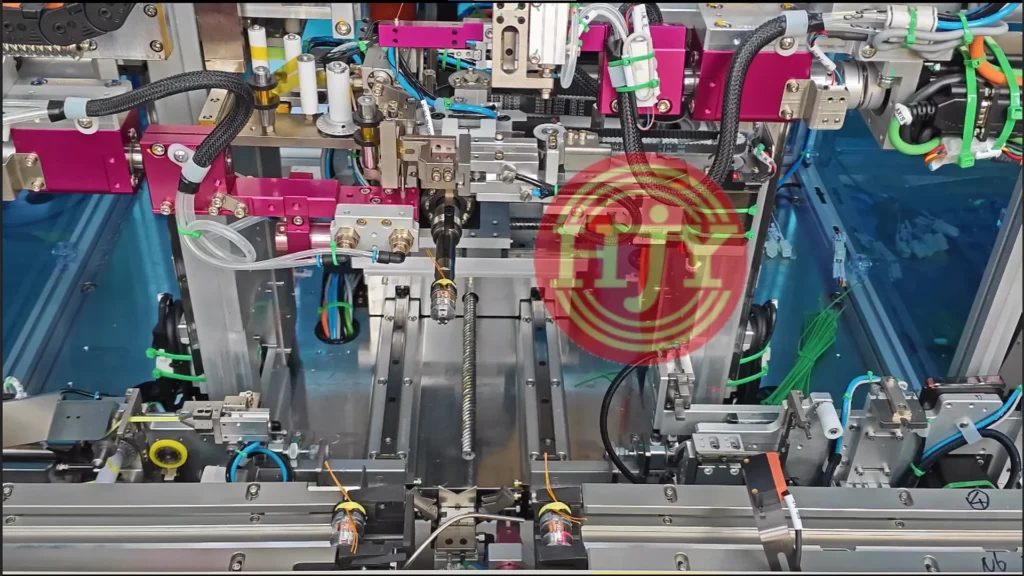
Show five process views: three-guide tooling, automatic sleeving, precision winding, automatic taping, and loading or unloading.
4. How the Integrated Platform Supports Flexible Production
4.1 Reduced Work-in-Process Handling
Combining sleeving, winding, lead processing, cutting, and taping on one platform reduces movement between machines and repeated loading. This helps limit orientation, position, and appearance variation introduced at process handoffs.
4.2 Multi-Model Recipe Management
The equipment can store product-specific turn counts, winding sequences, tension settings, lead lengths, sleeving parameters, and taping parameters. During changeover, the corresponding recipe can be recalled and the required tooling replaced, reducing repeated setup work.
Products with major structural differences may still require new guides, fixtures, sleeving mechanisms, or tension components. The practical compatibility range and changeover time should be defined during project evaluation.
4.3 Modular Function Expansion
Depending on project requirements, soldering, welding, resistance testing, surge testing, vision inspection, automatic tray placement, and data traceability can be added. The machine can operate as a stand-alone unit or be connected to an automated production line.
4.4 Reduced Manual Dependency
Programmed processes and automatic transfer reduce repetitive sleeving, hooking, cutting, and taping operations. Operators can focus on material replenishment, changeover, inspection, and exception handling.
5. Equipment Capability Should Not Be Judged by Wire Range or Positioning Accuracy Alone
The mass-production capability of a single-spindle dual-arm sleeving and winding machine should not be judged only by its maximum speed, nominal wire range, or single-axis positioning specification. A complete evaluation should also consider:
- Total production cycle time on the actual product
- Continuous-run yield and stability
- Sleeve-feeding and insertion success rate
- Tension performance across different wire diameters
- Lead-length and lead-position consistency
- Winding-sequence and turn-count error prevention
- Tape position and appearance
- Changeover time and tooling replacement method
- Wear-part life and maintenance accessibility
- Electrical testing and data-traceability requirements
The theoretical positioning capability of an axis is not the same as final product accuracy. Wire elasticity, bobbin tolerance, fixture clearance, and the process path all affect the finished result. Final performance should be confirmed through sample trials and continuous-production validation.
6. Applicable Products and Industries
The machine can be used for:
- High-frequency transformer coils
- Switch-mode power supply transformers
- Automotive electronic transformers
- Magnetic components for new-energy power and energy-storage systems
- Magnetic components for appliances and consumer electronics
- Relay, solenoid-valve, and other bobbin-type coils
- Products requiring multiple lead groups, insulation sleeves, or multiple wire diameters
EP, PQ, EQ, and other custom bobbins can be evaluated. Compatibility depends on bobbin dimensions, terminal structure, winding space, and process requirements.
7. Information Required for Project Evaluation
To evaluate equipment configuration, process feasibility, cycle time, and quotation, please provide:
- Product 2D and 3D drawings
- Bobbin, terminal, and finished-coil samples
- Wire specification, turn count, and direction for each winding
- Winding sequence and start-wire and finish-wire paths
- Sleeve material, inside and outside diameters, length, and quantity
- Reserved lead length and terminal connection method
- Tape specification, wrapping direction, and wrap count
- Resistance, surge, dielectric-withstand, and other test standards
- Appearance and dimensional acceptance criteria
- Target cycle time and annual capacity
- Product models to be accommodated
- Loading method and downstream connection requirements
- Data recording, barcode, or MES interface requirements
For products using multiple wire diameters, several windings, or special sleeves, sample winding and automatic sleeve-insertion trials are recommended before the final machine configuration is confirmed.
JHY Single-Spindle Dual-Arm Sleeving and Winding Automation Solution
Based on the bobbin structure, number of windings, wire diameters, sleeve specifications, lead arrangement, and target capacity, JHY can provide stand-alone single-spindle dual-arm equipment or an integrated automation solution.
The system can be configured with multi-wire management, automatic sleeving, precision winding, lead processing, wire cutting, taping, loading and unloading, electrical testing, vision inspection, and data traceability.
From sample trials and pilot production to stable mass production, the JHY engineering team evaluates the process path, tension method, tooling structure, equipment configuration, and production cycle according to the customer’s drawings, samples, and quality standards.
If you are planning an automation project for multi-winding, sleeved-lead, or multi-wire coils, please provide JHY with your product information, samples, and capacity target.